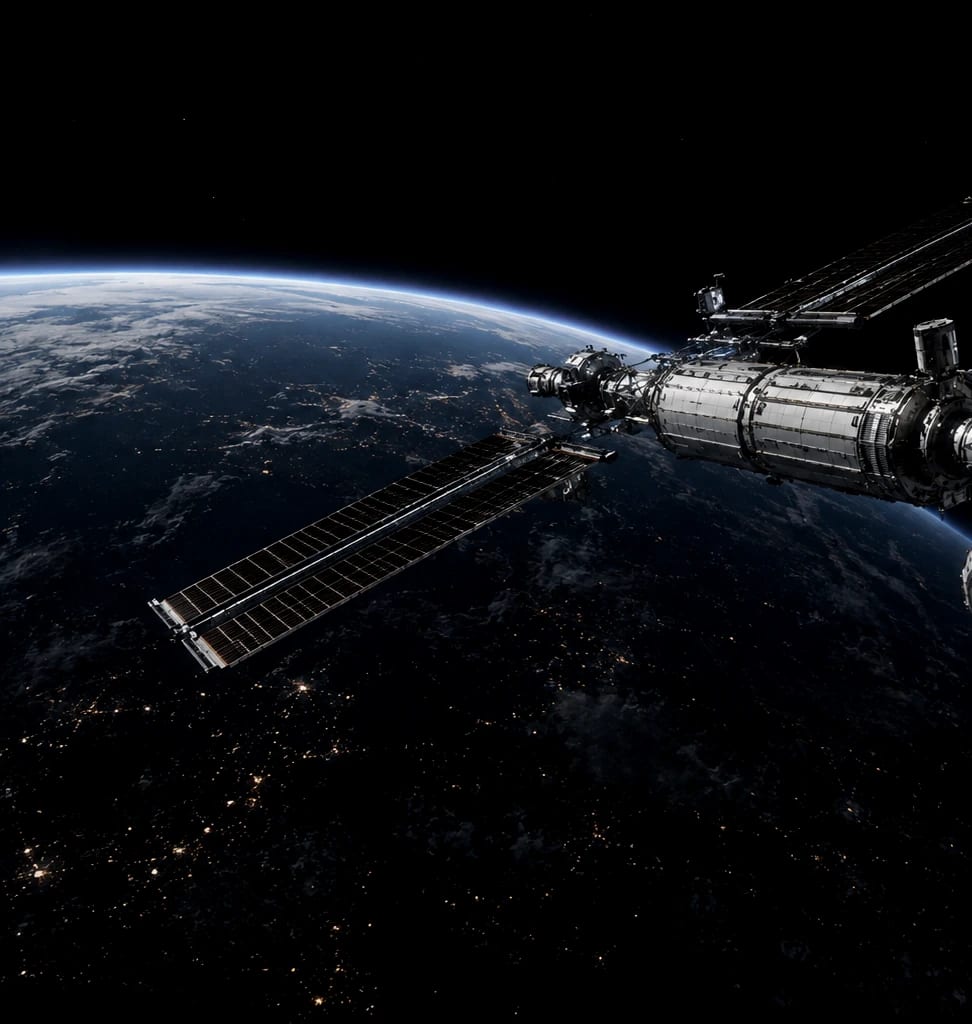
We do not justreach new worlds.We build them.
Mining. Construction. Infrastructure.
For the space economy.
Move to steerHold to charge
01Origin
The resource
frontier
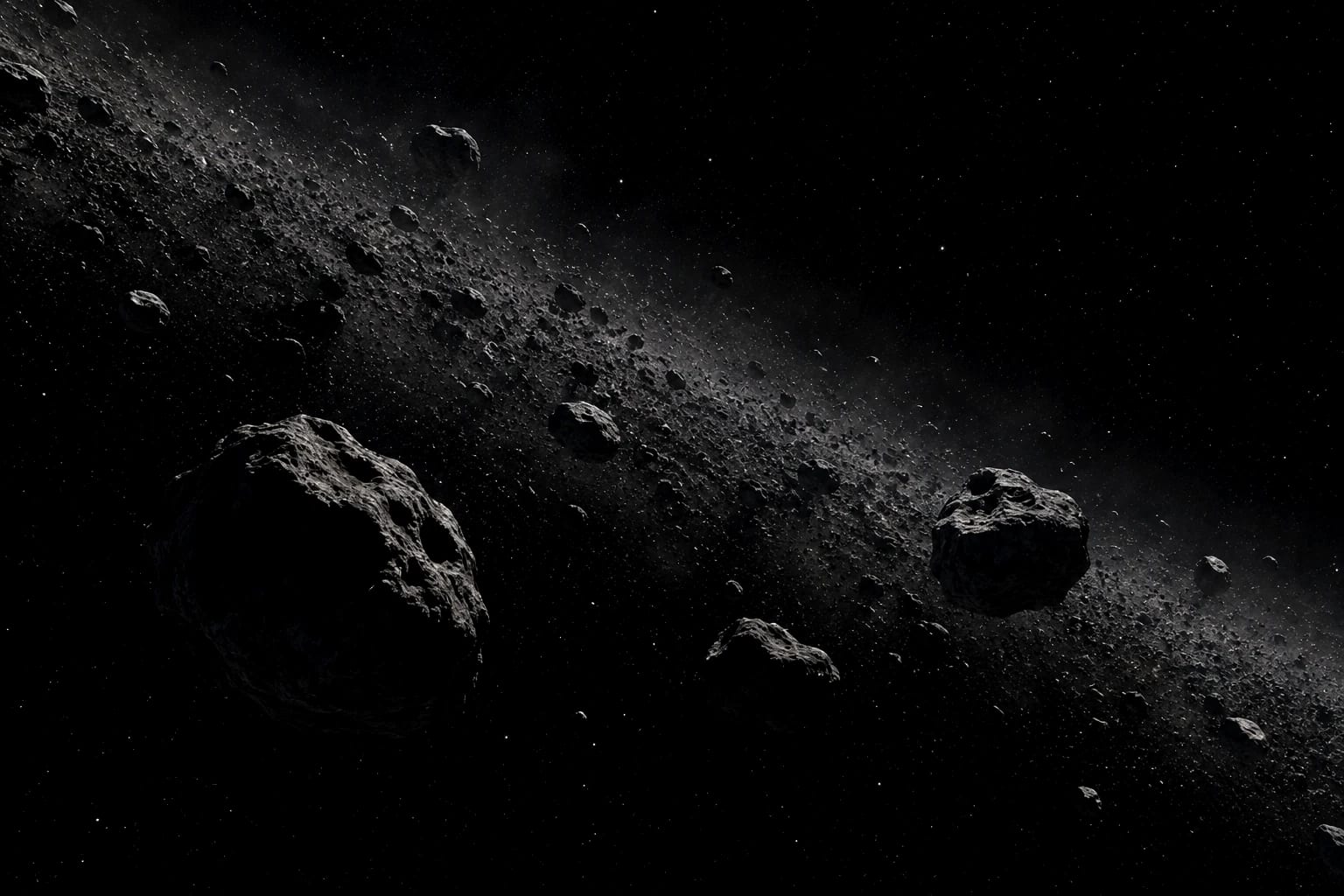
Asteroids contain the raw materials required for a permanent off-world economy. Water for propellant, metals for structure, and the volatiles that make a supply chain beyond Earth possible at all.
Elemental composition, representative C-type body
- Water ice
- 32.6%
- Silicates
- 24.9%
- Iron
- 24.1%
- Nickel
- 16.3%
- Platinum group
- 2.1%
02Probing
Probing
Probes are sent to different asteroids to identify the minerals and approximate their quantity for economically feasible extraction.
03Extract
Extract
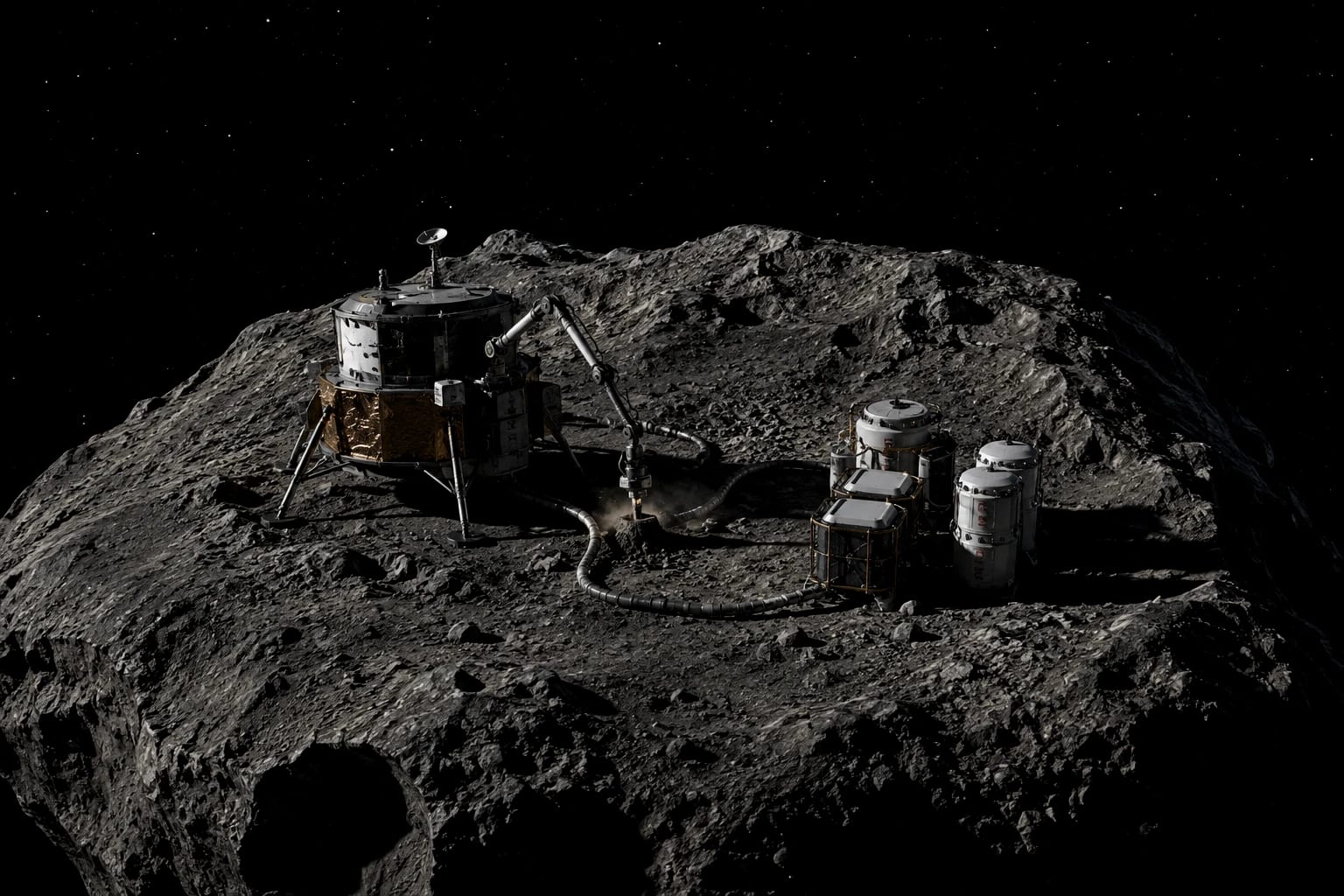
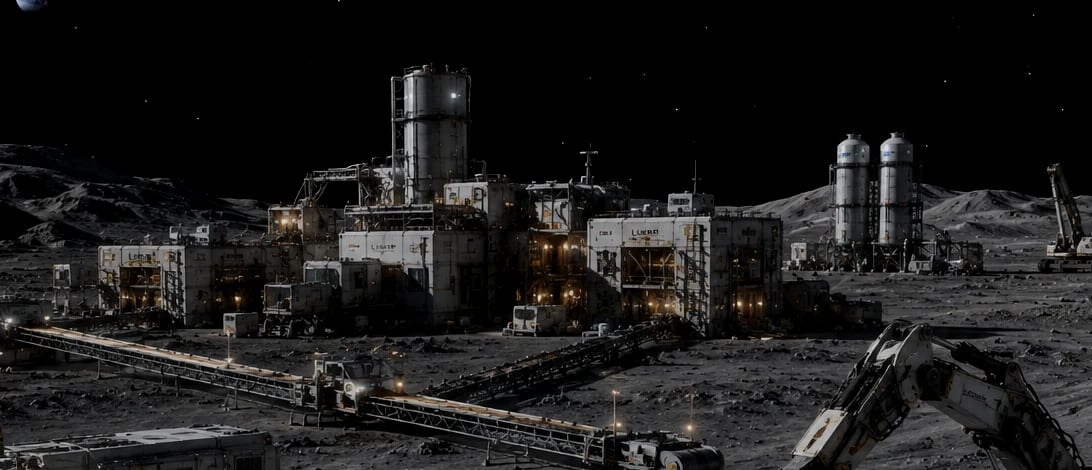
Autonomous systems recover valuable resources with precision and minimal human exposure. Anchor, core, cut, and transfer, on bodies where a crew would be the most expensive part of the operation.
04Refine
Refine
Refineries transform raw material into usable components, propellant and structural feedstock. Sited where the mass already is, so nothing is lifted out of a gravity well twice.
Propellant
Hydrogen and oxygen, electrolysed from recovered ice
Structural feedstock
Rolled plate, beam stock and printer wire
Refined metals
Iron, nickel and platinum-group separates
05Construct
Construct
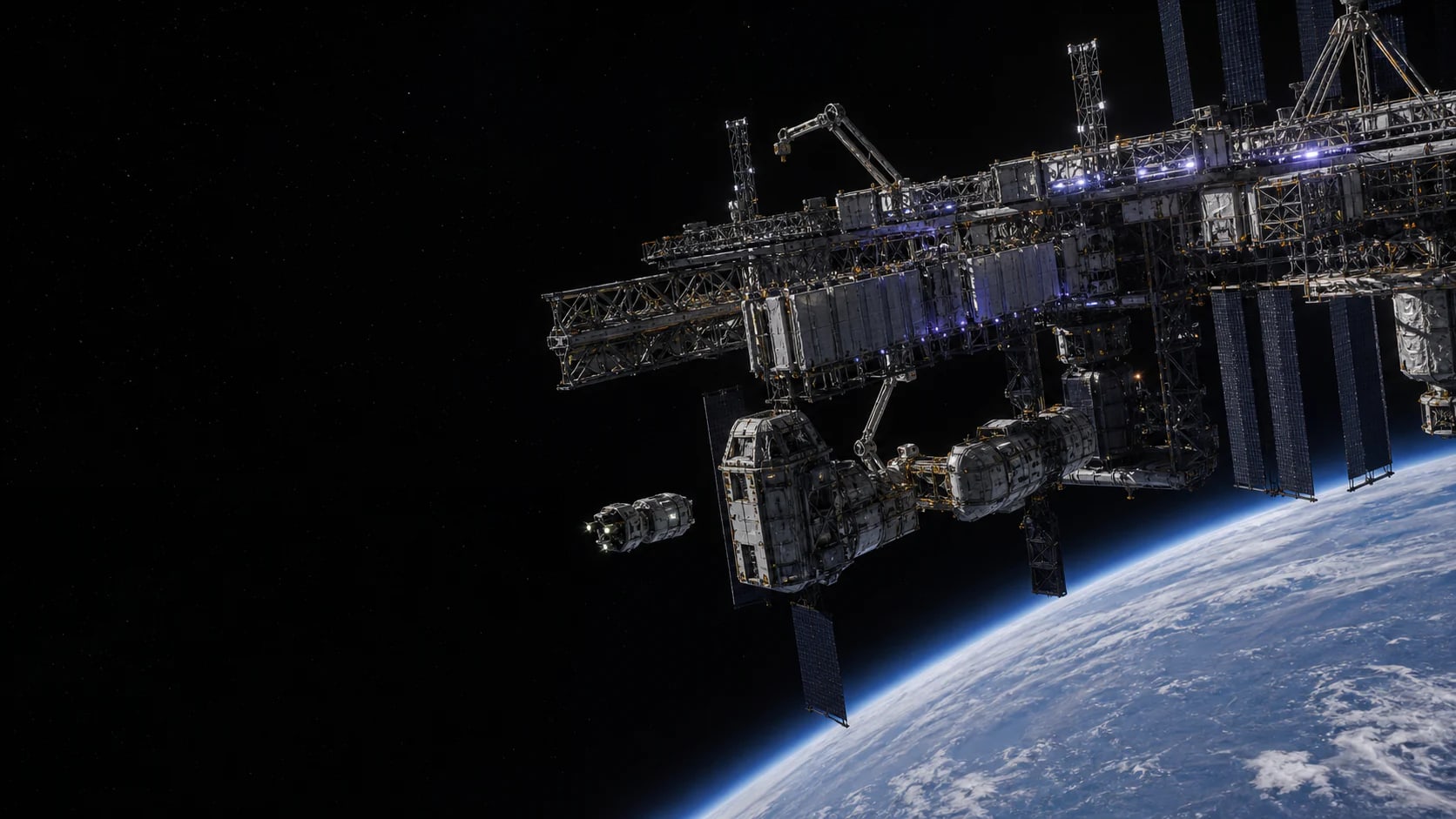
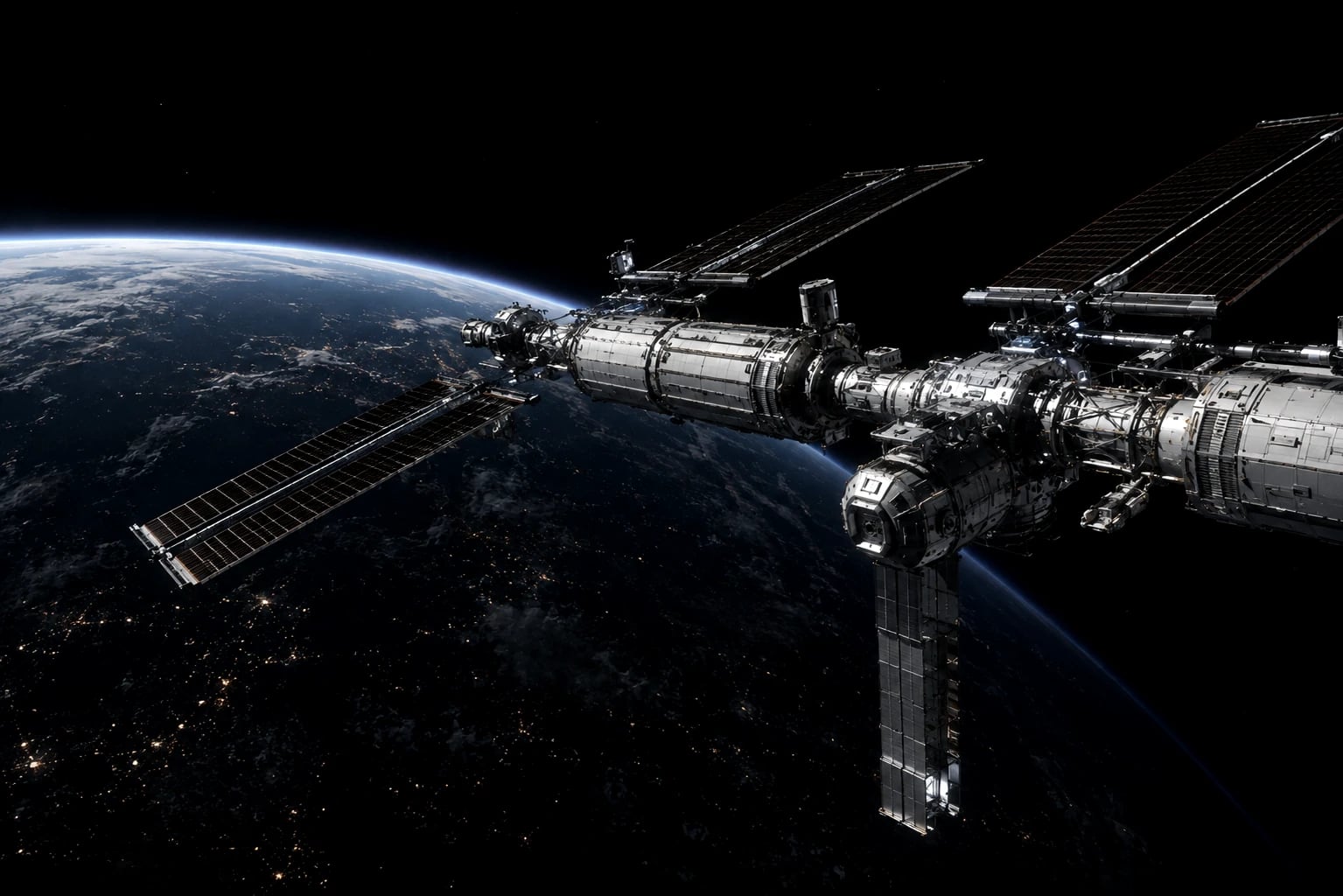
Modular orbital systems designed to grow, adapt and remain serviceable over decades. Every element arrives as a berth, not a monolith.
- Berths
- Pressurised, logistics and service
- Design life
- Thirty years, with module replacement
- Servicing
- Robotic, with crewed intervention
06Lunar
Lunar
infrastructure
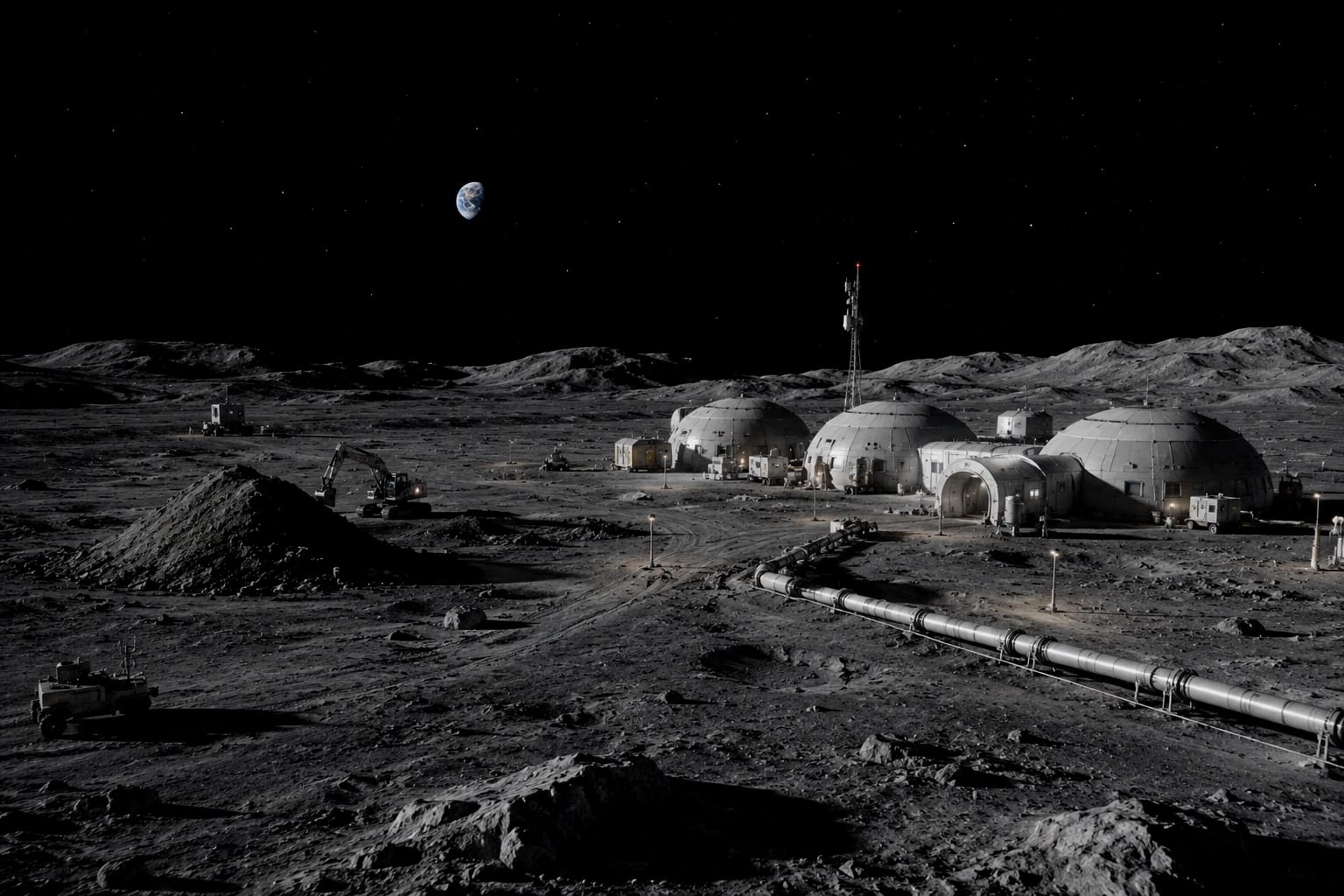
Building the systems required for long-duration human and industrial activity on the Moon.
07Resource systems
Lunar resource
systems
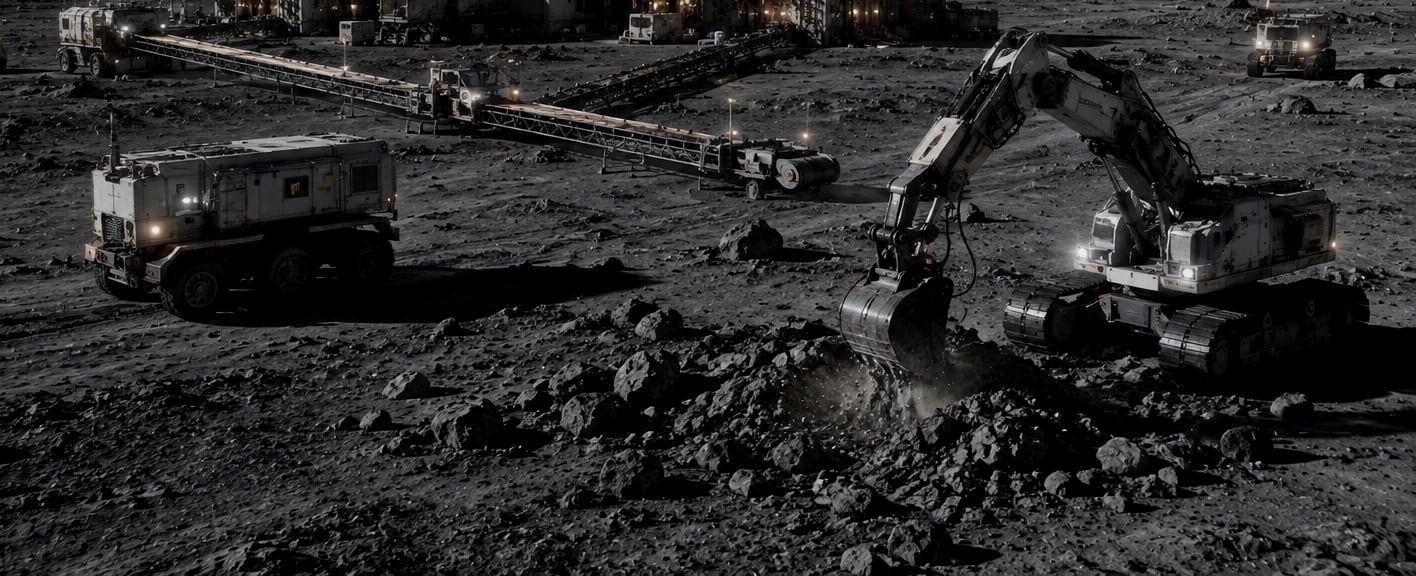
Autonomous excavation and processing designed for lunar dust, vacuum, radiation and extreme temperature cycles.
- Surface temperature
- Minus 173 to 127 °C
- Solar day
- 29.5 Earth days
- Ambient pressure
- Hard vacuum
- Regolith
- Abrasive, electrostatically charged
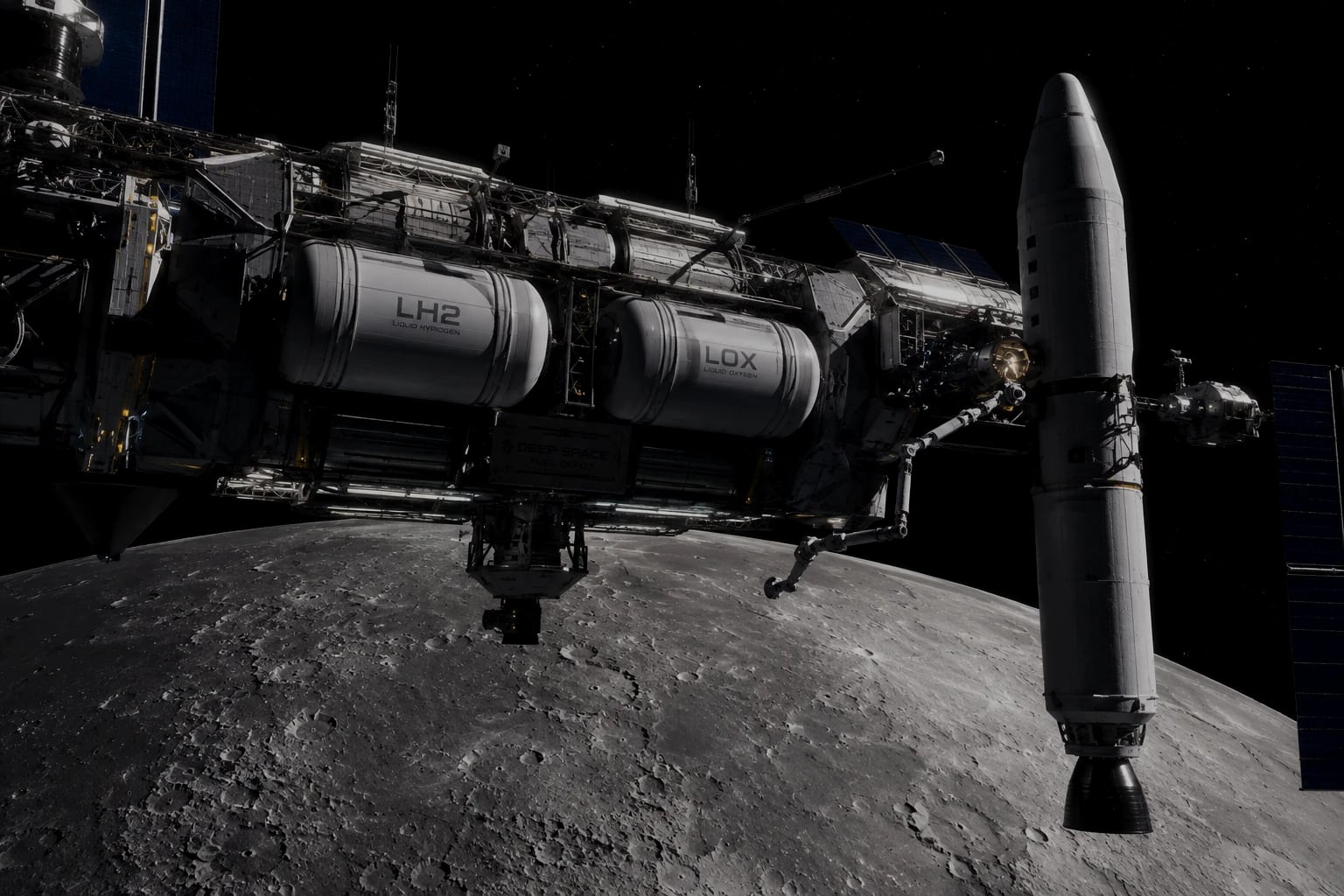
08Depot
Fuel the
next journey
Orbital propellant depots allow spacecraft to refuel beyond Earth and continue deeper into space. A vehicle that launches empty and fills up in orbit is a different vehicle entirely.
09Logistics
Interplanetary logistics
A permanent space economy depends on the reliable movement of material, fuel, equipment and people between distant nodes.
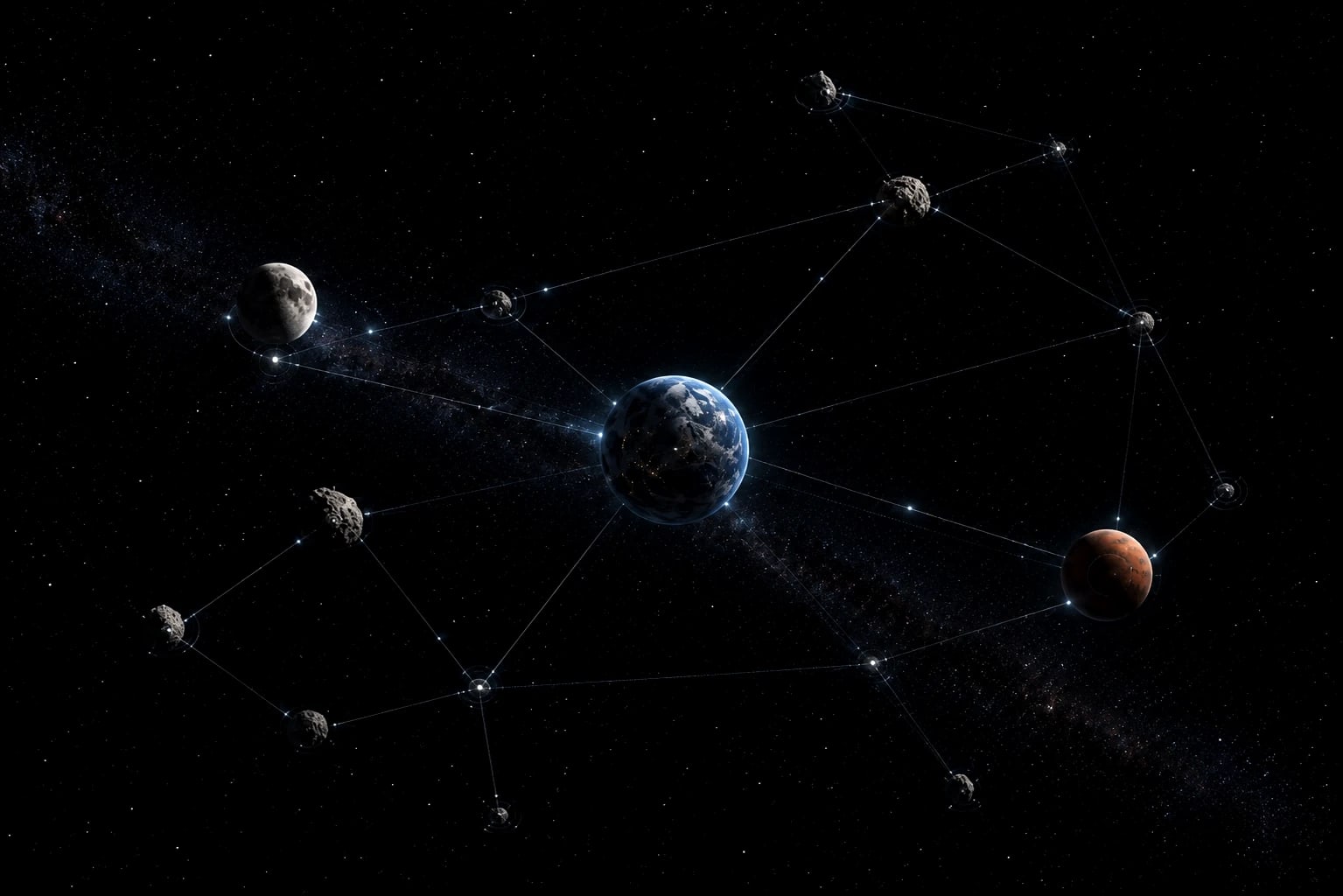
- Lunar orbitRelay node
- Main beltResource node
- Outer beltResource node
- Mars orbitOperations node